In this article
- Why restaurant finances are uniquely hard
- What restaurant accounting software should connect
- POS to ledger: closing the day properly
- Delivery platforms: reconciling commissions and payouts
- Recipe costing software: know your plate cost
- Food cost control restaurant managers can act on: theoretical vs actual
- Restaurant inventory management software: from delivery to plate
- Restaurant bookkeeping UAE owners must get right: VAT, fees and month-end
- Cloud kitchen accounting: many brands, one kitchen
- Multi-outlet consolidation and group reporting
- Payroll and staff costs
- Choosing a system: quick comparison of approaches
- FAQ
- Conclusion: restaurant accounting software should show you profit, not just sales
A busy café in JLT can sell hundreds of covers a day and still lose money. Not because the food isn’t good, but because nobody knows the true cost of each plate, the delivery apps take more than expected, and the VAT return is built from POS exports and a shoebox of supplier invoices. Restaurant accounting software that links your POS, inventory, recipes and ledger is how F&B operators in the UAE turn sales into profit they can actually see.
This article explains what that software should do for UAE restaurants, cafés, cloud kitchens and multi-outlet groups: POS-to-ledger posting, delivery platform reconciliation, recipe costing, wastage control, VAT and local fees, payroll and consolidated reporting.
Why restaurant finances are uniquely hard
Restaurants combine retail-speed transactions with manufacturing-style costing. Every dish is a small production order: raw ingredients, prepared components, labour and packaging turned into a product sold within minutes. Margins are thin, ingredient prices move with the season and the exchange rate, and a large share of sales may arrive through third-party apps that pay out net of commission, days later.
In the UAE, add:
- VAT at 5% on most food and beverage sales, with menu prices typically shown VAT-inclusive to consumers.
- Municipality and tourism fees in some outlets, especially within hotels, which vary by emirate.
- A heavy reliance on delivery platforms, each with its own commission structure, promotions and payout cycle.
- High staff turnover and a large, multinational workforce on WPS payroll.
- Summer seasonality, with dine-in falling in some locations during the hottest months while delivery rises.
Basic bookkeeping tools can record the results. They can’t tell you why the results are what they are.
What restaurant accounting software should connect
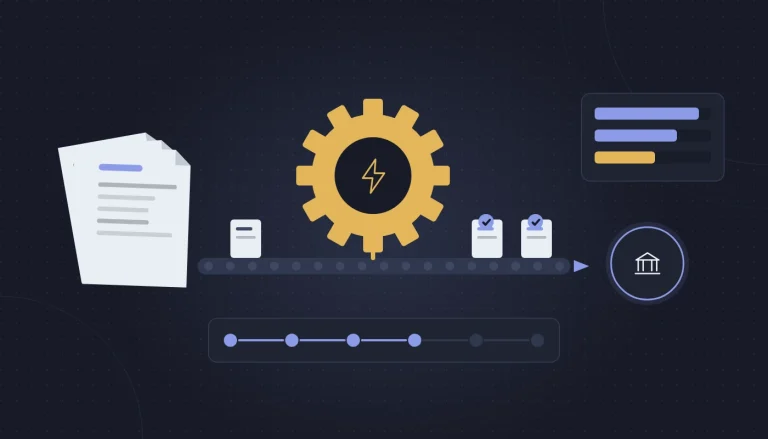
The single most important principle is integration. Good restaurant accounting software is less a standalone package and more the hub that receives data from everything else.
| Source | Data that should flow in | What it lets you see |
|---|---|---|
| POS | Sales by item, outlet, shift, payment method, discounts, voids | Revenue, VAT output, theoretical consumption |
| Delivery platforms | Orders, commissions, promotions, refunds, payouts | True net revenue per channel |
| Purchasing | Supplier orders, goods received, invoices | Actual ingredient cost, VAT input |
| Inventory | Stock counts, transfers, wastage | Actual consumption and variance |
| Recipes | Ingredient quantities per dish and per component | Plate cost and theoretical food cost |
| Payroll | Salaries, overtime, service charge distribution, WPS | Labour cost per outlet |
| Bank and card acquirers | Settlements, fees, chargebacks | Cash position and card fee cost |
When those links work, the finance team stops re-keying and starts analysing.
POS to ledger: closing the day properly
The point of sale is where revenue is born. A POS system in Dubai that posts to the ERP should send a daily summary (or individual transactions) into accounting with:
- Gross sales by revenue category (food, beverage, retail, delivery).
- Discounts and complimentary items, with reasons.
- VAT collected.
- Payment methods: cash, cards by acquirer, digital wallets, vouchers, house accounts.
- Service charges and tips, recorded as liabilities where they belong to staff.
- Voids and refunds, with the user who authorised them.
Cash and card reconciliation
Each outlet’s cash should be counted, recorded and deposited with a clear variance report. Card settlements from acquirers arrive net of fees and sometimes a day or two later; the software should match settlements to POS totals and record merchant fees as an expense. Chargebacks should be visible, not buried.
Scenario: a three-outlet burger concept in Dubai found its card fees were materially higher than expected once settlements were matched properly. The difference came from one outlet whose terminal was routing international cards through a costlier channel — something nobody had noticed when sales were posted as a single daily figure.
Delivery platforms: reconciling commissions and payouts
For many UAE restaurants, delivery is a large share of sales. The challenge is that platforms pay out a net figure after deducting commissions, restaurant-funded promotions, packaging or service charges, refunds for missing items and sometimes advertising spend. Reconciling the payout back to the orders is time-consuming and often skipped — which means the true margin on delivery is unknown.
Your system should break every payout into its components:
- Gross order value (as recorded in your POS or the platform’s tablet).
- Less: platform commission, usually invoiced with VAT, which you can generally recover as input tax.
- Less: restaurant-funded discounts and promotions.
- Less: refunds and adjustments.
- Less: paid advertising or placement fees.
- Equals: net payout to your bank.
When orders come directly from the platforms into the POS through an integration, this becomes far easier. Where they don’t, a custom API integration between platform reports and your ERP can automate most of the matching.
Scenario: a cloud kitchen operator in Al Barsha running five virtual brands across three delivery apps had always treated payouts as revenue. When each payout was broken down, one brand that looked busy turned out to have a contribution margin close to zero once its permanent promotion and commission were deducted. The brand was repriced and its menu shortened within a month.
Recipe costing software: know your plate cost
You cannot control food cost without knowing what each dish should cost. Recipe costing software — whether part of the ERP or a module linked to it — holds a recipe card for every menu item, with exact quantities of each ingredient and sub-recipe.
Building good recipe cards
- Use yields. A kilo of whole salmon doesn’t produce a kilo of fillet. Record trim loss and cooking loss so the cost reflects usable product.
- Use sub-recipes. Sauces, dressings, doughs and marinades are prepared in batches; cost them once and use them in many dishes.
- Include packaging for takeaway and delivery items — boxes, bags, cutlery and sauces add up.
- Update costs automatically from the latest purchase prices, so that when imported avocados or beef rise in price, plate costs update without anyone recalculating.
Using plate cost to price the menu
With accurate plate costs, menu engineering becomes possible: identify dishes that are popular and profitable, popular but low-margin, profitable but rarely ordered, and neither. Pricing for delivery can also differ from dine-in to account for commission, where your platform agreements allow.
Food cost control restaurant managers can act on: theoretical vs actual
Food cost control in a restaurant comes down to one comparison: what you should have used versus what you did use.
- Theoretical food cost = sales of each item × its recipe cost. This is what your kitchen would have consumed if every portion were perfect and nothing was wasted.
- Actual food cost = opening stock + purchases − closing stock (with transfers adjusted).
- Variance = actual − theoretical.
A small variance is normal. A large or growing one points to over-portioning, unrecorded wastage, staff meals not logged, incorrect recipes, receiving errors or theft.
Wastage and staff meals
Record wastage daily by reason — spoilage, preparation error, returned dish, expired stock — and record staff meals as their own category. In UAE summers, cold-chain failures during delivery or power interruptions can cause sudden spoilage; logging it properly keeps your variance meaningful.
Count frequency
High-value items (meat, seafood, premium beverages) are often counted daily or weekly; everything else monthly. The software should allow partial counts by category and location, ideally on a tablet in the store room.
Restaurant inventory management software: from delivery to plate
Restaurant inventory management software covers the path from supplier to kitchen:
- Purchase orders based on par levels and forecast covers.
- Receiving against the order, checking quantities, weights, temperatures and expiry dates — with photos of rejected items.
- Supplier invoice matching so you only pay for what arrived at the agreed price.
- Central kitchen production and transfers to outlets, at cost.
- Batch and expiry tracking for chilled and frozen goods, which also supports food safety inspections.
- Units of measure that convert between purchase (case, kg) and recipe units (g, ml, portion).
For groups with a central kitchen or commissary, transfers to outlets need proper costing so each outlet’s food cost is correct. Our page on inventory management systems in Dubai explains multi-location stock, and the inventory management software features guide is a helpful checklist when comparing systems.
Restaurant bookkeeping UAE owners must get right: VAT, fees and month-end
Restaurant bookkeeping in the UAE has a few local specifics worth getting right in the system configuration.
VAT
- Most food and beverage sales are standard-rated at 5%.
- Prices to consumers are generally displayed inclusive of VAT, so the POS must extract VAT correctly from the inclusive price.
- Simplified tax invoices are typically used for walk-in customers, while full tax invoices are needed for business customers on request.
- Input VAT on ingredients, rent, utilities, equipment and platform commissions can usually be recovered if you hold valid tax invoices.
Municipality, tourism and service charges
Some outlets, particularly in hotels and certain licensed venues, charge municipality fees, tourism fees and service charges, which vary by emirate and by type of establishment. How these interact with VAT, and whether service charge is passed to staff, must be configured carefully in the POS and accounting system so the VAT return and staff payouts are both correct.
Corporate Tax and e-invoicing
Restaurant companies are generally subject to UAE Corporate Tax at 9% on taxable income above the threshold, so accrual accounting, fixed asset registers for fit-out and kitchen equipment, and clean records matter. UAE e-invoicing will apply to B2B transactions — such as supplier invoices, catering contracts and corporate accounts — from 2027 under the phased timeline, while B2C sales are excluded for now.
A month-end routine that works
A typical monthly close for a multi-outlet restaurant group should include: POS-to-ledger checks, card and delivery reconciliations, supplier statement reconciliations, stock counts and variance review, payroll and service charge accruals, prepayments (rent is often paid quarterly or by post-dated cheques), and outlet-level profit and loss. With the right accounting software in Dubai, most of this becomes review rather than data entry.
Cloud kitchen accounting: many brands, one kitchen
Cloud kitchens are common in Dubai, Abu Dhabi and Sharjah, and they bring their own accounting challenges. Cloud kitchen accounting needs to answer: which brand, on which platform, in which location, actually makes money?
That means:
- Brand-level revenue and cost even though the kitchen, staff and many ingredients are shared.
- Allocation rules for shared costs — rent, utilities, labour and common ingredients — by order count, sales value or prep time.
- Platform-level profitability after commissions and promotions.
- Packaging cost per brand, which can differ significantly.
- Hub-level reporting where an operator runs several kitchen locations.
ERP platforms that support analytic accounts or dimensions make this practical. Odoo ERP, for example, can combine POS, inventory, purchasing, manufacturing-style recipes and analytic accounting in one database, which suits operators who want brand-level reporting without stitching together several tools.
Multi-outlet consolidation and group reporting
Once an operator has more than two or three outlets, the questions change. It is no longer “did we make money this month?” but “which outlets, brands and channels made money, and which are dragging the group down?”
A group-level setup should give you:
- Outlet profit and loss with the same chart of accounts everywhere, so comparisons are fair.
- Prime cost (food and beverage cost plus labour) as a percentage of sales by outlet — the single most watched number in many F&B groups.
- Central costs such as head office, marketing and the central kitchen, either allocated to outlets or shown separately.
- Inter-company transactions where outlets sit in different legal entities, for example a mainland restaurant company and a free zone catering or franchise company.
- Franchise and royalty tracking for operators running international brands under licence, where fees are often calculated on gross or net sales.
Scenario: a homegrown Emirati-cuisine concept expanding from two to seven outlets in Dubai and Abu Dhabi had each restaurant keeping its own books with a part-time accountant. Bringing all outlets into one system with a shared chart of accounts showed that two mall locations with the highest sales also had the highest rent and labour ratios — and the lowest profit. Lease renegotiation and a revised staffing model followed, decisions that had been impossible when every outlet reported differently.
Consolidated reporting also makes conversations with landlords, banks and investors much easier, because the numbers are consistent and backed by a clear audit trail.
Payroll and staff costs
Labour is usually the second-largest cost after food. Restaurant payroll in the UAE involves shift patterns, overtime, split shifts, staff accommodation and transport, meal allowances, service charge distribution where applicable, WPS submissions and end-of-service gratuity. Linking payroll to outlet cost centres lets you track labour cost as a percentage of sales by outlet and by month — one of the most useful numbers an operator can watch.
Choosing a system: quick comparison of approaches
| Approach | Best for | Strengths | Watch-outs |
|---|---|---|---|
| POS + basic accounting package | Single café or small restaurant | Simple, quick to start | Manual reconciliation, little cost control |
| POS + specialist F&B inventory tool + accounting | Growing operators | Strong recipe and stock features | Three systems to integrate and maintain |
| Integrated ERP with POS, inventory, recipes and accounting | Multi-outlet groups, cloud kitchens, central kitchens | One database, consolidated reporting | Needs proper implementation and training |
Cost models vary: POS is often licensed per terminal or outlet, specialist tools per location, and ERP per user. The main cost factors are the number of outlets, terminals, brands, integrations (delivery platforms, payment acquirers, accounting) and recipe data to set up. For an overview of restaurant management software options across the hospitality sector, see our industry page.
For a wider view of what integrated systems bring, our article on the advantages of ERP for UAE businesses covers benefits that apply well beyond F&B.
Frequently asked questions
What is the best restaurant accounting software for a UAE restaurant group?
For multi-outlet groups, an integrated system that connects POS, inventory, recipes, payroll and accounting usually works best, because it gives outlet-level profit and loss and real food cost control. A single café may manage with a POS and a simpler accounting package.
How does recipe costing software help reduce food cost?
It calculates the exact cost of each dish from current ingredient prices, yields and sub-recipes. Comparing this theoretical cost with actual consumption reveals over-portioning, waste and pricing problems.
What should restaurant inventory management software include?
Purchase orders based on par levels, receiving checks, supplier invoice matching, unit conversions, batch and expiry tracking, central kitchen transfers, wastage logging and regular stock counts with variance reports.
How do I reconcile delivery app payouts?
Break each payout into gross orders, commission, restaurant-funded promotions, refunds and advertising fees, then match it to your POS or platform order data. Automated integrations make this much faster than manual spreadsheet work.
Is restaurant bookkeeping in the UAE different from other businesses?
The principles are the same, but restaurants deal with VAT-inclusive pricing, possible municipality or tourism fees, service charges, high-volume card settlements, delivery platform reconciliations and food cost control, all of which need specific configuration.
How does cloud kitchen accounting work with several brands?
Each brand is tracked as its own profit centre, with shared costs such as rent, labour and utilities allocated using agreed rules. Platform commissions and packaging are tracked per brand so you can see which ones are genuinely profitable.
Conclusion: restaurant accounting software should show you profit, not just sales
The right restaurant accounting software connects every part of the operation — POS, delivery apps, purchasing, stock, recipes and payroll — so you see food cost, channel margins and outlet profit while there is still time to act. In the UAE, it also keeps VAT, local fees and upcoming e-invoicing in order without extra effort at month-end.
Start with the integrations that matter most for your business, build accurate recipe cards, and make stock counts a habit. For more practical advice, browse our ERP blog.